
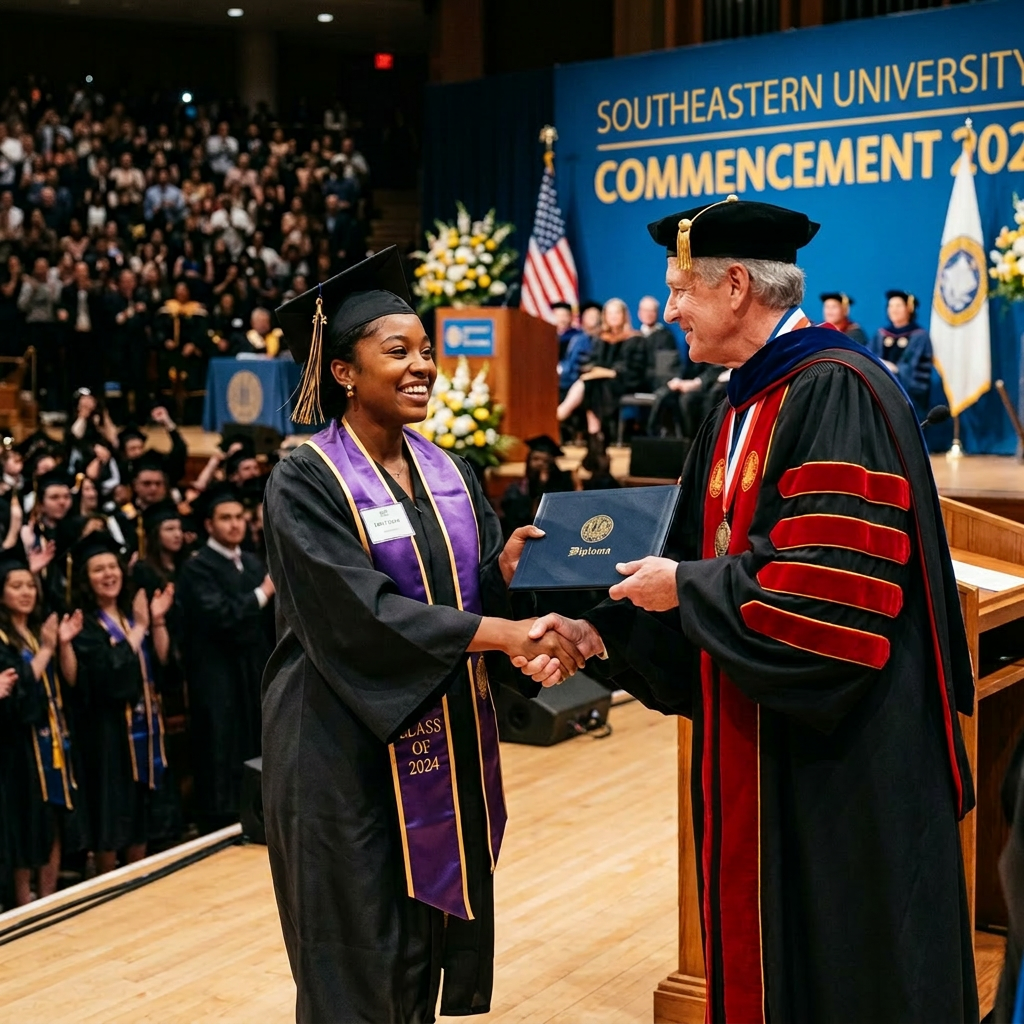
More families today are exploring educational pathways that allow students to accelerate their academic progress, reduce future college costs, and prepare for long-term success earlier than traditional high school models typically allow.
One of the fastest-growing options is the opportunity to graduate high school with an associate degree through early college and dual enrollment programs.
For homeschool families and Christian parents especially, this pathway offers a unique combination of:
- college readiness
- academic challenge
- financial savings
- leadership development
- Christian worldview education
- accelerated university preparation
Instead of waiting until after high school graduation to begin college coursework, students can earn substantial college credits — and in some cases complete an Associate of Arts (AA) degree — while still in high school.
At Florida Collegiate High School (FLCHS), students pursue a Christ-centered collegiate pathway designed to help them prepare academically, spiritually, and personally for college, career, leadership, and lifelong impact.
What Does It Mean to Graduate High School With an Associate Degree?
To graduate high school with an associate degree means a student completes both:
- high school graduation requirements
- college-level coursework leading toward an Associate of Arts degree
during the high school years.
Students accomplish this through dual enrollment and early college programs that allow high school coursework and college coursework to overlap strategically.
What Is an Associate Degree?
An Associate of Arts (AA) degree is a college degree typically awarded after completing approximately two years of undergraduate coursework.
It often includes:
- general education requirements
- introductory college courses
- foundational academic subjects
These credits are frequently transferable to four-year universities.
How Students Earn an Associate Degree During High School
Students usually begin taking college-level courses during high school through dual enrollment partnerships.
Over time, they may accumulate enough credits to complete:
- general education requirements
- core academic coursework
- degree pathway requirements
Depending on the program structure and student progress, some students graduate high school with:
- dozens of transferable college credits
- nearly two years of college completed
- an Associate of Arts degree
This creates a significant head start toward a bachelor’s degree.
How Early College Works
An early college model intentionally combines high school and college coursework into a unified academic pathway.
Instead of separating college preparation from high school education, students gradually begin participating in collegiate-level learning earlier.
Key Components of Early College Programs
Students typically experience:
- dual enrollment coursework
- college-level academics
- structured academic support
- advising and mentoring
- leadership development
- increased academic expectations
Programs are designed to help students transition into university-level learning gradually and successfully.
What Is Dual Enrollment?
Dual enrollment allows students to earn both:
- high school credit
- college credit
at the same time.
Students take approved college-level courses while still completing high school graduation requirements.
Benefits of Early College Programs
Academic Advancement
Students develop:
- stronger writing skills
- critical thinking ability
- academic discipline
- time management
- independent learning habits
University Readiness
Students become familiar with:
- college expectations
- classroom rigor
- academic deadlines
- research assignments
- collegiate learning environments
Increased Confidence
Students often feel more prepared and confident entering university after successfully completing college coursework during high school.
Benefits of Associate Degrees in High School
Many families are drawn to early college pathways because of the long-term academic and financial advantages.
Top Benefits of Graduating High School With an Associate Degree
1. Lower Future College Costs
One of the biggest advantages is reduced tuition expenses.
Students who complete college credits early may:
- shorten time needed for a bachelor’s degree
- reduce overall tuition costs
- avoid unnecessary student debt
- enter the workforce sooner
2. Faster Degree Completion
Students may enter university with advanced standing.
Some students begin college as:
- sophomores
- juniors
- advanced transfer students
This accelerated pathway may allow students to complete four-year degrees earlier than traditional students.
3. Stronger College Applications
Colleges often view dual enrollment and early college students favorably because they have already demonstrated success in rigorous academic environments.
Students may strengthen:
- university applications
- scholarship opportunities
- academic resumes
- leadership profiles
4. Academic Confidence and Maturity
Students gain experience navigating:
- college coursework
- research expectations
- classroom discussions
- independent study habits
This often creates a smoother transition into university life.
5. Career and Leadership Preparation
Early college students frequently develop:
- responsibility
- initiative
- communication skills
- professionalism
- leadership ability
These qualities benefit students academically and professionally long-term.
Tuition Savings
College affordability has become one of the biggest concerns for families today.
An early college pathway can significantly reduce the financial burden of higher education.
How Early College Saves Families Money
Students who earn college credits during high school may reduce:
- future tuition costs
- student loan debt
- housing expenses
- textbook expenses
- time spent completing degrees
For many families, this creates a more financially sustainable pathway toward higher education.
Comparing Traditional College Costs
Traditional university pathways often require:
- four full years of tuition
- housing expenses
- meal plans
- textbook costs
- student loan borrowing
Students who enter university with substantial college credits may dramatically reduce these expenses.
Long-Term Financial Advantages
Graduating college earlier may also allow students to:
- enter careers sooner
- pursue graduate school earlier
- reduce financial pressure
- build long-term financial stability faster
For Christian families seeking wise financial stewardship, early college pathways can provide meaningful long-term value.
Transfer Credits
One of the most important questions families ask is whether dual enrollment credits transfer to universities.
In many cases, they do.
How Transfer Credits Work
Transfer credits are college credits earned at one institution that may be accepted by another college or university.
Students who complete dual enrollment coursework often transfer those credits toward future bachelor’s degree programs.
Common Types of Transferable Credits
Students may complete:
- English composition
- mathematics
- history
- science
- humanities
- social sciences
- introductory electives
These courses often fulfill general education requirements at universities.
Benefits of Transfer Credits
Transfer credits may help students:
- reduce university course loads
- graduate earlier
- save money
- pursue internships sooner
- focus on advanced coursework earlier
Questions Families Should Ask About Transfer Credits
Parents should research:
- transfer agreements
- university policies
- accreditation standards
- degree pathway compatibility
Strong early college programs help guide families through these considerations.
Christian Student Support
One of the biggest concerns many Christian parents have is preparing students for college environments while maintaining strong faith foundations.
A Christian early college environment helps bridge this transition intentionally.
Why Christian Student Support Matters
Students entering college often encounter:
- intellectual challenges
- cultural pressures
- worldview conflicts
- increased independence
Christian collegiate programs help students prepare spiritually and emotionally while pursuing academic advancement.
Faith and Academic Excellence Together
At FLCHS, students are encouraged to pursue both:
- academic rigor
- spiritual growth
Education is viewed as preparation for:
- leadership
- service
- vocation
- Christian influence
Students are challenged to think critically while remaining grounded in biblical truth.
Biblical Worldview Integration
Christian early college programs integrate biblical worldview education across subjects.
Students learn how to:
- evaluate ideas biblically
- engage culture thoughtfully
- lead with integrity
- pursue truth with wisdom
- use education for God’s purposes
Leadership Development and Character Formation
Christian student support also emphasizes:
- leadership development
- servant leadership
- character formation
- responsibility
- humility
- perseverance
Students are encouraged to grow both academically and personally.
Homeschool Families and Early College Pathways
Many homeschool families are especially interested in early college opportunities.
These programs can provide important support during the high school years while preserving many of the strengths homeschool families value.
Why Homeschool Families Choose Early College Programs
Homeschool parents often seek:
- advanced academics
- dual enrollment access
- academic accountability
- college readiness support
- Christian mentorship
- structured collegiate experiences
Early college pathways help students transition gradually into university-level learning environments.
Benefits for Homeschool Students
Homeschool students often benefit from:
- increased academic confidence
- classroom discussion experience
- peer collaboration
- leadership opportunities
- transcript support
- university preparation
These experiences help students prepare for future academic success.
Is an Early College Pathway Right for Your Student?
Students who pursue associate degree pathways during high school are often:
- academically motivated
- mature and responsible
- interested in college preparation
- seeking academic challenge
- leadership-oriented
- goal-driven learners
Parents should evaluate both academic readiness and emotional maturity when considering early college options.
Why Families Choose FLCHS
Florida Collegiate High School provides a Christ-centered collegiate environment designed to help students pursue:
- dual enrollment
- associate degree pathways
- leadership development
- Christian worldview education
- academic accountability
- college readiness
Families appreciate the combination of:
- advanced academics
- spiritual support
- mentorship
- affordability
- leadership formation
- homeschool-friendly flexibility
Students are encouraged to pursue excellence while growing spiritually, academically, and personally.
Frequently Asked Questions
Can students really graduate high school with an associate degree?
Yes. Some students complete enough college coursework through dual enrollment and early college programs to earn an Associate of Arts degree during high school.
What are the benefits of graduating high school with college credits?
Benefits may include:
- lower tuition costs
- faster degree completion
- stronger college applications
- academic confidence
- earlier career preparation
What is dual enrollment?
Dual enrollment allows students to earn both high school and college credit simultaneously through approved college-level coursework.
Do college credits transfer to universities?
Many dual enrollment credits transfer to colleges and universities, though policies vary by institution.
Why do Christian families choose early college programs?
Families often value:
- faith integration
- academic rigor
- leadership development
- affordability
- biblical worldview education
- supportive collegiate preparation
Begin the Early College Journey
Families today are searching for educational pathways that combine:
- academic excellence
- Christian worldview education
- leadership development
- affordability
- university preparation
- long-term opportunity
An early college pathway that allows students to graduate high school with an associate degree can provide a meaningful head start toward future success.
At Florida Collegiate High School, students pursue a Christ-centered collegiate education designed to help them prepare for college, career, leadership, and lifelong impact.
Schedule an Information Session
Learn how FLCHS helps students pursue dual enrollment, associate degree pathways, and Christian collegiate education in a supportive academic environment.